What Idaho Homeowners Should Know About Water Damage Insurance Claims (2026 Guide)
By Restoration Pro · Published October 23, 2026 · 4 min read
Educational information based on commonly observed restoration and insurance claim scenarios throughout Idaho.
Water damage is one of the most common property losses experienced by Idaho homeowners. Whether the source is a burst pipe, appliance failure, roof leak, or hidden plumbing issue, property owners are often faced with several immediate questions:
- Should I contact my insurance carrier?
- What documentation should I gather?
- How do insurance companies typically evaluate water damage claims?
- What steps should I take to reduce further damage?
While every insurance policy is different, there are common factors that many carriers evaluate when investigating water damage losses. Understanding those factors can help homeowners make informed decisions following a property damage event.
Important Disclaimer
This article is intended for educational purposes only and reflects commonly observed industry practices. Restoration Pro does not determine insurance coverage, interpret policy language, or represent policyholders in coverage disputes. Actual claim outcomes may vary based on policy language, endorsements, exclusions, property conditions, and the insurer’s investigation of the loss.
How Insurance Carriers Commonly Evaluate Water Damage Claims
Although every situation is unique, insurance carriers frequently investigate several key factors when reviewing a water damage claim:
Cause of the Water Loss
One of the first questions often examined is:
What caused the water damage?
Examples may include:
- Plumbing failures
- Appliance malfunctions
- Water heater failures
- Roof leaks
- Storm-related damage
- Irrigation system failures
The cause of loss often plays a significant role in how a claim is evaluated.
Condition of the Property
Insurance investigations may also consider:
- Maintenance history
- Prior damage
- Evidence of ongoing moisture issues
- Visible deterioration
- Previous repairs
In many situations, adjusters attempt to determine whether damage resulted from a sudden event or developed over an extended period.
Extent of Damage
Insurance carriers, mitigation contractors, and other professionals frequently document:
- Affected building materials
- Moisture migration
- Secondary impacts
- Contents damage
- Areas requiring drying or reconstruction
This documentation can become an important part of the overall claim file.
Common Water Damage Scenarios Seen Throughout Idaho
Burst Pipes During Idaho Winters
Freeze-related pipe failures remain one of the most common water damage events in Idaho.
These losses often occur when:
- Temperatures drop suddenly
- Vacant properties lose heat
- Exterior plumbing freezes
- Uninsulated pipes become exposed to extreme temperatures
When a pipe bursts, water can travel rapidly through wall cavities, insulation, flooring systems, and crawlspaces before becoming visible.
Appliance and Water Heater Failures
Many significant losses begin with everyday appliances.
Examples include:
- Washing machine supply line failures
- Water heater ruptures
- Dishwasher leaks
- Refrigerator water line leaks
Because these events often occur behind cabinetry or within utility areas, damage may spread before being discovered.
Roof and Storm-Related Water Intrusion
Idaho homeowners occasionally experience water intrusion associated with:
- Wind events
- Hail storms
- Damaged roofing materials
- Wind-driven rain
In these situations, insurance carriers often investigate the condition of the roofing system, weather events, and the path of water intrusion.
Why Documentation Matters After Water Damage
Regardless of whether a homeowner intends to file a claim, documentation is generally considered an important part of managing a water loss.
Industry professionals commonly recommend documenting:
- The source of damage
- Standing water
- Damaged materials
- Moisture-affected contents
- Visible staining
- Repair and mitigation activities
Good documentation can help establish a timeline of events and provide a clearer understanding of the damage progression.
Understanding Secondary Damage
One topic frequently discussed in the restoration industry is secondary damage.
Secondary damage refers to additional deterioration that develops after the initial water event.
- Microbial growth
- Material deterioration
- Delaminating flooring
- Cabinet swelling
- Structural degradation
For this reason, restoration professionals generally emphasize the importance of promptly addressing water intrusion when it is discovered.
The Role of Emergency Mitigation
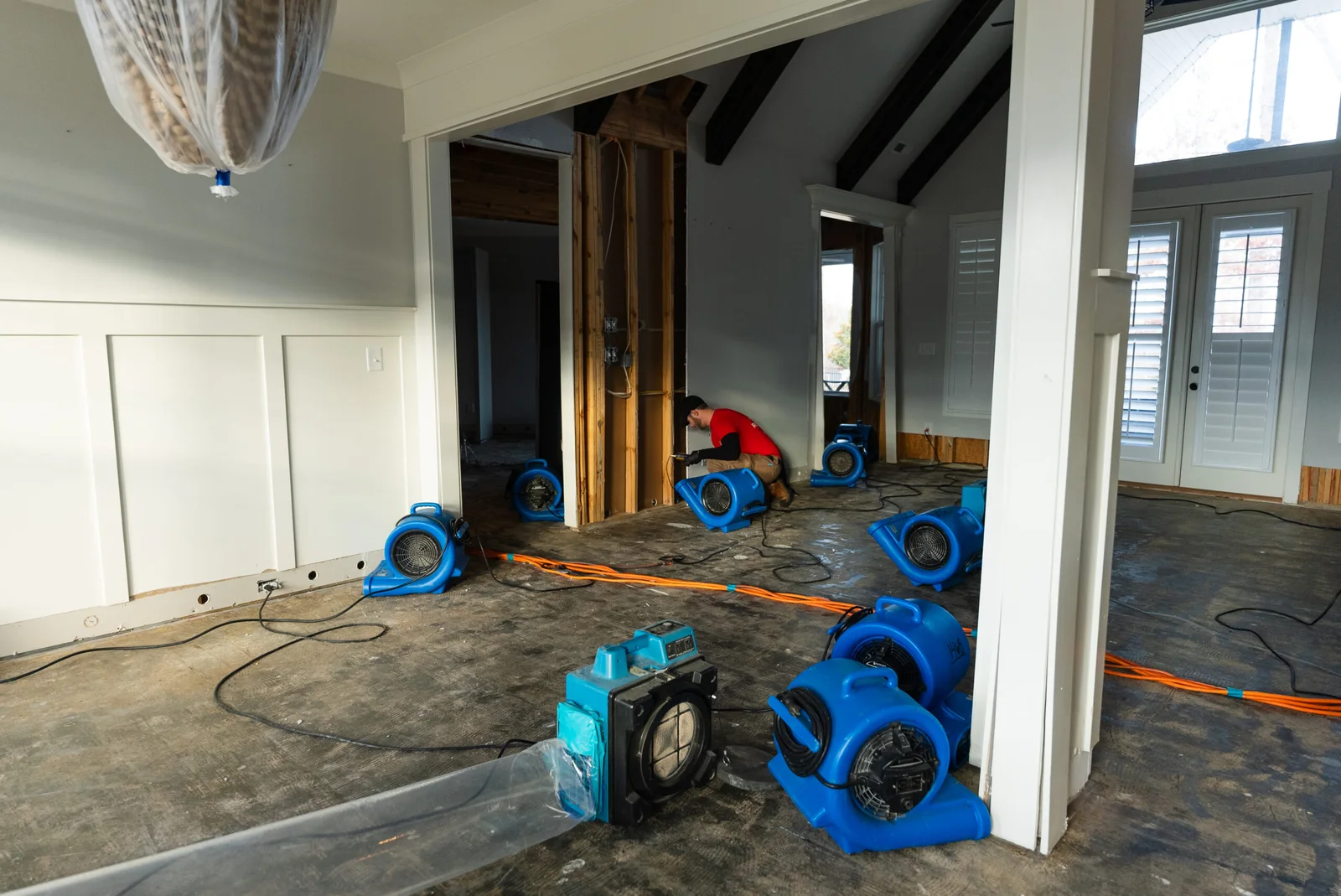
Mitigation is typically focused on reducing the spread of damage following a water loss.
Common mitigation activities may include:
- Water extraction
- Moisture mapping
- Controlled demolition when necessary
- Structural drying
- Humidity management
- Monitoring drying progress
Every property and loss scenario is different, which is why mitigation strategies are generally tailored to site conditions and moisture readings.
Questions Idaho Homeowners Often Ask
Should I contact my insurance carrier after discovering water damage?
Many homeowners choose to discuss the situation with their insurance carrier when significant water damage is discovered. Carriers can provide guidance regarding claim reporting procedures, policy questions, and next steps.
Does all water damage automatically result in an insurance claim?
Not necessarily. Homeowners make claim decisions for a variety of reasons, including deductible considerations, the extent of damage, and discussions with their insurance carrier.
Can mold develop after water damage?
Industry standards recognize that elevated moisture conditions can support mold growth if materials remain wet for extended periods.
How quickly should water damage be addressed?
Many restoration professionals recommend responding to water intrusion as soon as reasonably possible to help reduce the potential for additional damage.
What should I do first?
If safe to do so:
- Stop the source of water.
- Protect occupants and property.
- Document visible conditions.
- Contact relevant professionals as needed.
- Follow guidance provided by your insurance carrier and restoration team.
Final Thoughts
Water damage claims are rarely one-size-fits-all. Every property, insurance policy, cause of loss, and damage condition is different. While insurance carriers ultimately determine how claims are handled under the specific terms of a policy, homeowners can often benefit from understanding the factors that are commonly reviewed during the claim process.
From burst pipes and appliance failures to storm-related water intrusion, timely documentation and professional assessment can help provide a clearer picture of the loss and support informed decision-making throughout the restoration process.
If your Idaho home or business experiences water damage, Restoration Pro provides 24/7 emergency mitigation, moisture mapping, structural drying, and restoration services throughout the Treasure Valley.
Call (208) 922-8741 for Immediate Help