The 10 Most Asked Questions About Property Restoration
By Restoration Pro · Published August 18, 2026 · Updated August 19, 2026 · 3 min read
The Ultimate Homeowner Guide for Water, Fire, Mold & Insurance Claims
When disaster strikes, water damage, fire, mold, sewage, or storms, homeowners ask the same core questions. After researching the most frequently searched restoration questions across Google, Bing, AI engines, and industry sites, these are the Top 10 Most Asked Restoration Questions and the best multi‑angle answers your customers need.
1. What should I do first when I have water damage?
Short Answer: Stop the source, protect your safety, and call a certified restoration company immediately.
Expanded Answers:
- Safety First: Turn off electricity in affected areas if water is near outlets or appliances.
- Stop the Source: Shut off the main water supply or isolate the leaking fixture.
- Document Everything: Take photos and videos before cleanup, this helps with insurance.
- Call a Professional: Water spreads fast. A certified team (IICRC WRT/ASD) prevents mold, structural damage, and insurance denials.
- Don’t DIY Extraction: Shop vacs and fans cannot remove moisture trapped inside walls, subfloors, or insulation.
2. How long does water damage restoration take?
Short Answer: Most jobs take 3–7 days, but severe losses can take longer.
- Category 1 (Clean Water): 2–4 days of drying.
- Category 2 (Grey Water): 3–7 days due to sanitation requirements.
- Category 3 (Black Water/Sewage): 7+ days because contaminated materials must be removed.
- Structural Drying: Wood framing may require additional time depending on moisture levels.
- Insurance Delays: Adjuster scheduling and approvals can extend timelines.
3. Will my insurance cover water, fire, or mold damage?
Short Answer: Usually yes for sudden/accidental damage, but not for long‑term neglect.
- Covered: Burst pipes, appliance failures, accidental fires, storm damage, sudden leaks.
- Not Covered: Long‑term leaks, mold from neglect, pre‑existing damage, poor maintenance.
- Grey Areas: Crawlspace flooding, foundation seepage, and roof leaks depend on policy language.
- Pro Tip: A restoration company should document moisture readings, photos, and cause-of-loss to support your claim.
4. How do I know if mold is dangerous?
Short Answer: Any visible mold or musty odor requires professional evaluation.
- Health Risks: Allergies, respiratory issues, headaches, and immune reactions.
- Hidden Mold: Often inside walls, under flooring, or behind cabinets after water damage.
- Testing: Air sampling and surface testing can determine spore levels.
- Rule of Thumb: If mold covers more than 10 sq. ft., professional remediation is required.
5. How long does mold remediation take?
Short Answer: Typically 1–5 days, depending on contamination level.
- Small Areas: 1–2 days with containment and HEPA filtration.
- Moderate Growth: 3–5 days including removal of affected materials.
- Severe Contamination: Multi‑day demolition, cleaning, and clearance testing.
- Important: Mold remediation must follow IICRC S520 standards.
6. What is the difference between mitigation and restoration?
Short Answer: Mitigation stops further damage; restoration repairs the damage.
- Mitigation Includes: Water extraction, drying, dehumidification, board‑up, tarping, containment.
- Restoration Includes: Rebuilding, drywall, flooring, painting, structural repairs.
- Insurance Tip: Mitigation is almost always approved immediately; restoration may require adjuster review.
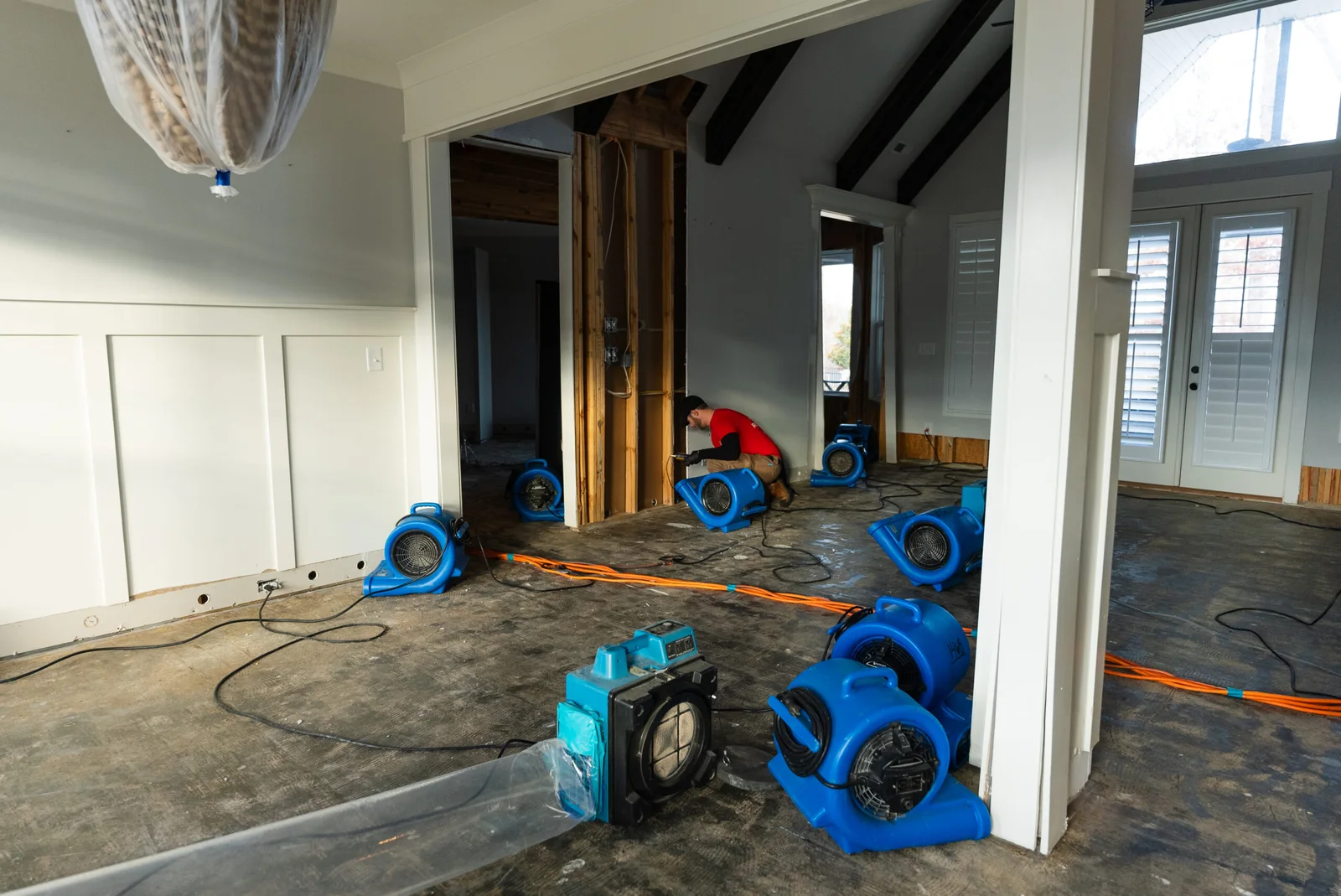
7. How do professionals dry a home after water damage?
Short Answer: Industrial extraction, air movers, dehumidifiers, and moisture monitoring.
- Extraction: Removing standing water is the fastest way to reduce damage.
- Airflow: High‑velocity air movers push moisture out of materials.
- Dehumidification: Removes moisture from the air to prevent mold.
- Moisture Mapping: Technicians use meters and infrared cameras to track hidden moisture.
- Structural Drying: Specialized equipment targets wall cavities, subfloors, and framing.
8. Can smoke and odor from a fire be fully removed?
Short Answer: Yes, with proper cleaning, deodorization, and HVAC treatment.
- Surface Cleaning: Soot removal using HEPA vacuums and chemical sponges.
- Odor Neutralization: Hydroxyl generators, ozone, and thermal fogging.
- HVAC Cleaning: Ductwork often traps smoke residue.
- Material Replacement: Severely charred or porous materials may need removal.
9. How do I choose the right restoration company?
Short Answer: Look for certifications, fast response, transparent pricing, and strong documentation.
- Certifications: IICRC WRT, ASD, FSRT, AMRT.
- Response Time: Faster arrival = less damage and lower cost.
- Insurance Experience: They should help navigate claims and provide adjuster-ready documentation.
- Reviews & Reputation: Look for consistent 5‑star service and real customer photos.
- Equipment & Training: Modern drying systems and trained technicians matter.
10. Can restoration prevent future problems like mold or structural issues?
Short Answer: Yes, proper mitigation prevents long‑term damage.
- Moisture Control: Ensures materials reach safe moisture levels.
- Sanitation: Prevents bacteria and mold growth.
- Structural Inspection: Identifies hidden damage early.
- Preventative Recommendations: Dehumidifiers, sump pumps, drainage improvements, roof repairs.
Final Takeaway for Homeowners
Restoration isn’t just cleanup, it’s science, documentation, and protection.
The right team prevents mold, reduces repair costs, and strengthens your insurance claim.
If you’re dealing with water, fire, mold, or storm damage, getting fast, certified help is the difference between a simple repair and a major reconstruction.
Call (208) 922-8741 for Immediate HelpRelated Posts
All posts →The Hidden Threat Checklist: 4 Property Emergencies Idaho Homeowners Overlook Until It’s Too LateAugust 20, 2026Idaho’s 2026 Property Insurance Shift: What Idaho Homeowners Must Know Before Filing a ClaimAugust 13, 2026Idaho’s 2026 Insurance Changes: What Homeowners Need to Know Before Filing a Water or Mold ClaimAugust 11, 2026